Best Reservoir Designs for Water Wall Fountains
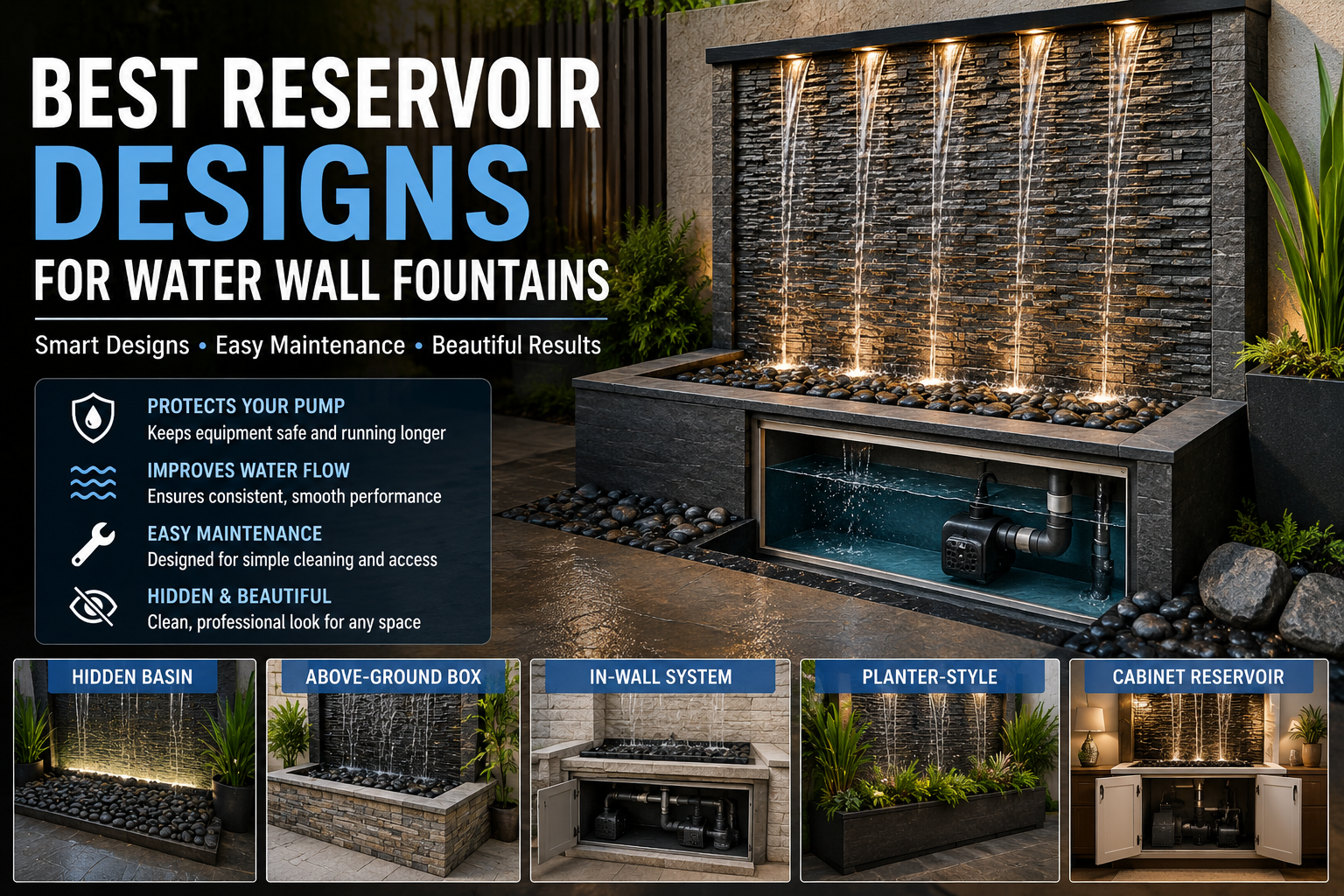
A water wall fountain may look simple from the outside, but the reservoir is one of the most important parts of the entire system. The reservoir holds the water, protects the pump, supports recirculation, and helps determine how easy the fountain will be to maintain over time.
Whether you are building an indoor water wall, an outdoor backyard fountain, or a custom patio water feature, choosing the right reservoir design can make the difference between a fountain that works smoothly and one that becomes frustrating to maintain.
Why the Reservoir Matters in a Water Wall Fountain
The reservoir is the hidden basin that stores and recirculates water through the fountain. In most water wall designs, water flows down the vertical surface, collects in the basin, and is pumped back to the top through tubing or a distribution system.
A well-designed water wall fountain reservoir helps with:
- Maintaining consistent water flow
- Protecting the fountain pump
- Reducing splashing and water loss
- Making cleaning and maintenance easier
- Hiding plumbing and mechanical components
- Improving the overall appearance of the water feature
Many water wall problems start with poor reservoir planning. A basin that is too small, difficult to access, or poorly sealed can create long-term issues even if the rest of the fountain looks beautiful.
1. Hidden Basin Reservoir
A hidden basin reservoir is one of the most popular choices for outdoor water wall fountains. With this design, the reservoir sits below the visible surface and is covered with decorative stone, grating, or a removable panel.
The goal is to make the water appear as though it disappears naturally into the ground or base of the fountain.
Best For:
- Backyard water walls
- Patio fountains
- Garden water features
- Modern outdoor fountains
Advantages:
- Clean professional appearance
- Conceals pump and plumbing
- Works well with decorative river rock
- Great for outdoor landscaping
If you want a professional-looking outdoor water wall fountain, a hidden basin is usually one of the best reservoir options.
2. Above-Ground Box Reservoir
An above-ground box reservoir is one of the easiest DIY reservoir designs. The basin is built into a rectangular box at the base of the water wall. The exterior can be finished with stone veneer, tile, wood-look composite, or other decorative materials.
This style works especially well when the water wall itself is freestanding.
Best For:
- DIY water wall fountains
- Freestanding patio fountains
- Small backyard water features
- Budget-friendly builds
Advantages:
- Easy to build
- Simple pump access
- Can be finished to match the wall
- Good option for beginners
The biggest advantage of this design is simplicity. If you are building your first DIY water wall fountain, an above-ground box reservoir may be the easiest place to start.
3. In-Wall Reservoir System
An in-wall reservoir system is more advanced. In this design, the reservoir and plumbing are integrated into the wall structure itself. This creates a very clean, architectural appearance because the mechanical components are hidden almost completely.
This approach is common in high-end indoor water walls, commercial water features, and custom installations.
Best For:
- Indoor water walls
- Luxury installations
- Commercial water features
- Built-in architectural fountains
Advantages:
- Very clean finished appearance
- Minimal visible equipment
- Excellent for modern interiors
- Can look highly professional
The downside is complexity. In-wall reservoir systems require careful waterproofing, maintenance access, and planning. If access is not designed properly, future repairs can become difficult.
4. Planter-Style Reservoir
A planter-style reservoir combines the fountain basin with landscaping. Plants, decorative grasses, and stone can be used to hide the reservoir while making the water wall feel more natural.
This is an excellent option for homeowners who want the fountain to blend into a garden or patio setting.
Best For:
- Garden water walls
- Courtyard fountains
- Natural landscape designs
- Outdoor relaxation spaces
Advantages:
- Softens the appearance of the fountain
- Blends well with landscaping
- Can hide the basin naturally
- Adds color and texture
When using plants near a reservoir, make sure leaves and soil cannot easily fall into the water. Debris can clog the pump and reduce water flow.
5. Cabinet Reservoir for Indoor Water Walls
For indoor water wall fountains, a cabinet reservoir can be one of the most practical options. The reservoir sits inside a cabinet or enclosed base beneath the water wall.
The cabinet hides the pump, tubing, and basin while still allowing access through doors or removable panels.
Best For:
- Indoor water walls
- Entryway fountains
- Office water features
- Living room installations
Advantages:
- Clean indoor appearance
- Easy access through cabinet doors
- Can match existing furniture or trim
- Protects mechanical parts from view
Indoor reservoir designs should always prioritize waterproofing and spill control. Even a small leak indoors can create damage if the reservoir is not designed properly.
How Large Should a Water Wall Reservoir Be?
One of the most common DIY mistakes is building the reservoir too small. A small basin may save space, but it often creates more maintenance problems.
A larger reservoir usually provides:
- More stable water levels
- Less frequent refilling
- Better pump protection
- Reduced chance of running dry
- More forgiving operation in hot weather
Outdoor water walls generally need larger reservoirs than indoor water walls because evaporation is higher and wind can increase water loss.
Reservoir Access Is Critical
No matter which reservoir design you choose, you need easy access to the pump and plumbing. Pumps eventually need cleaning, tubing may need adjustment, and debris can collect over time.
Good reservoir access may include:
- Removable top panels
- Hinged doors
- Lift-off stone grates
- Hidden access panels
- Removable decorative covers
A reservoir that looks beautiful but cannot be serviced easily will become frustrating. Always plan maintenance access before finishing the fountain.
Best Materials for Water Wall Reservoirs
Reservoir materials need to be waterproof, durable, and compatible with constant moisture.
Common reservoir materials include:
- Preformed pond basins
- Pond liners
- Waterproof plastic tubs
- Fiberglass basins
- Concrete basins with waterproof coating
- Stainless steel basins
For most DIY builders, a preformed basin or pond liner system is usually the easiest option. More advanced builders may prefer a custom concrete or stainless steel reservoir.
Common Reservoir Design Mistakes
Many reservoir problems can be avoided with better planning.
Avoid these common mistakes:
- Making the basin too small
- Failing to include pump access
- Using materials that are not waterproof
- Allowing debris to fall directly into the basin
- Forgetting overflow or drainage planning
- Creating a design that is difficult to clean
These mistakes can lead to pump failure, leaks, algae growth, uneven flow, and constant refilling.
Which Reservoir Design Is Best?
The best water wall fountain reservoir depends on your project type.
- Best for beginners: Above-ground box reservoir
- Best for outdoor landscaping: Hidden basin reservoir
- Best for indoor fountains: Cabinet reservoir
- Best luxury appearance: In-wall reservoir system
- Best natural design: Planter-style reservoir
If you are building your first fountain, choose a reservoir design that is simple, accessible, and easy to maintain. You can always create a more advanced design later as your experience grows.
Related Articles
- How to Hide a Water Wall Reservoir
- DIY Water Wall Plans
- Water Wall Fountain Maintenance Guide
- Water Wall Fountain Troubleshooting & Repair Guide
- Water Wall Fountain Cost Guide
Final Thoughts
The reservoir may not be the most visible part of a water wall fountain, but it is one of the most important. A good reservoir design improves water flow, protects the pump, reduces maintenance, and helps the entire fountain look more professional.
For most homeowners, the best reservoir is one that is large enough, easy to access, properly waterproofed, and hidden well enough that the focus remains on the beauty of the water wall itself.
Before starting your build, take time to plan the reservoir carefully. It will make your water wall fountain easier to maintain, more reliable, and more enjoyable for years to come.