Fountain Buying Guide: 5 Questions to Answer Before You Buy
Fountains vary enormously in size, power needs, sound, and upkeep. Answer these five questions first and you’ll narrow your options fast — and avoid ending up with a fountain that’s the wrong fit for your space.
1. Where will it go, and how much space does it actually have?
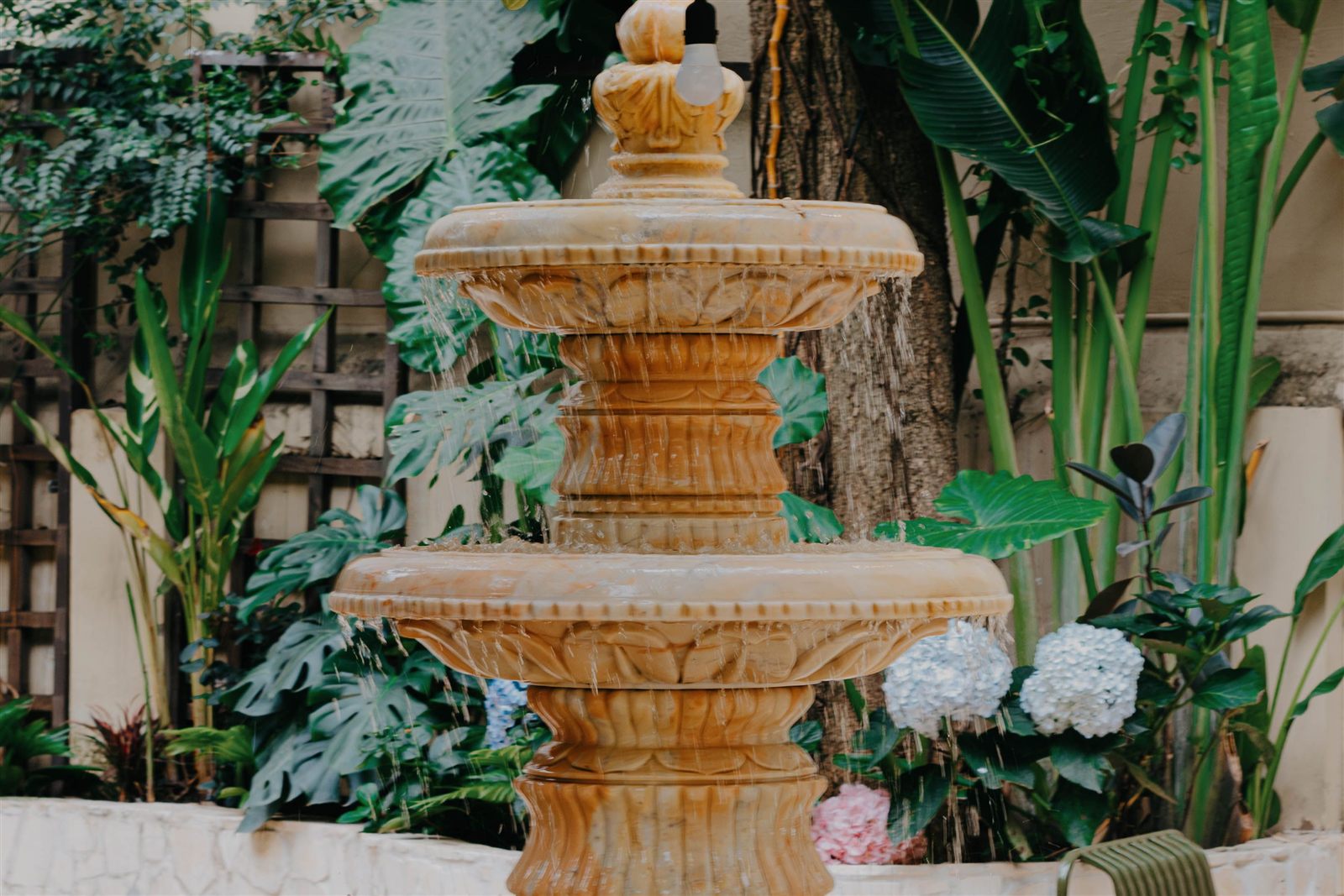
Start with the location, not the fountain. Indoors, on a patio, in a garden bed, mounted on a wall, or floating in a pond each rule out different options before you’ve looked at a single product. Measure the actual footprint, including roughly a foot of clearance on the side you’ll reach in from to fill and clean it — not just the spot where it will visually sit. If it splashes, also check what’s within a couple of feet: siding, wood furniture, or a walkway that stays wet isn’t obvious from a product photo.
Think about viewing distance too. A tabletop or entry piece gets seen up close, where small details and finish quality matter. A yard centerpiece is usually seen from a distance, where scale and silhouette matter more than fine detail. If your total footprint is under about two feet square, tabletop or wall-mounted are close to the only realistic fits — a garden or pond fountain needs real ground space to look right, not just to physically fit.
Also check what the location does to the fountain over a year: direct sun, deep shade, or hard freezes in winter all affect material choice and whether the fountain needs to be moved or drained seasonally. A common mistake is picking a spot for how it looks today and only discovering the winter-freeze or full-sun problem a season later.
2. Is there power nearby, or should you consider solar?
Most fountains need a power source reasonably close to the planned location. Walk the actual cord path before you buy, not just eyeball the distance — if the nearest outlet is more than roughly 25 feet away, running a cord gets impractical fast, and a solar-powered option is usually the more realistic choice, especially in a sunny spot.
An indoor outlet doesn’t automatically work outdoors. Outdoor use typically needs a weatherproof, GFCI-protected outlet, and the exact requirement depends on your local code and the fountain’s own instructions — confirm both with the manufacturer’s instructions or a qualified electrician before you buy if you’re not sure an outdoor circuit is already in place. This guide is a planning aid, not electrical guidance.
3. How loud do you actually want it?
Fountains range from a strong, splashing sound to a quiet trickle, and product listings describe this inconsistently — “soothing” and “tranquil” get used for fountains at very different volumes. If you can, listen to a similar fountain running in person (a garden center display, a friend’s yard) rather than trusting a product video, where audio is often normalized and misleading either way.
If the fountain will sit within about 10 feet of a bedroom or office window, favor a single, gentle drop — wall-mounted and small tabletop designs are the more predictable choice there. Larger drops and multi-tier designs generally run louder and are better suited to a yard or patio where some distance absorbs the sound.
4. How much upkeep are you actually willing to do?
Plan on checking water level roughly weekly in hot weather, when evaporation speeds up — a fountain that runs dry can burn out its pump in minutes. Plan on a real clean, not just a top-off, every four to eight weeks to clear algae and mineral buildup; if your water is notably hard, expect the shorter end of that range or budget for a filter. Be honest about how often you’ll actually do this, not how often you intend to.
If you travel often or know you won’t check water levels reliably, a larger reservoir buys more time before it runs dry than a small tabletop unit will. In freezing climates, confirm before buying whether the fountain can be drained and stored, is rated for winter use, or needs to come inside entirely — a common and expensive mistake is finding out only after the first hard freeze cracks a basin or pump housing.
5. What’s the real total cost, not just the price tag?
The purchase price is only part of it. Over the fountain’s life you’ll likely replace the pump at least once, pay a small but real amount for electricity to run it, and occasionally replace parts. A cheaper fountain that needs more upkeep or a pricier replacement pump can cost more over time than a pricier one that doesn’t — the sticker price isn’t the whole comparison.
If your budget is on the lower end, tabletop and small solar units are the realistic category; garden, pond, and multi-tier designs generally cost meaningfully more, both to buy and to run. Decide up front whether you want a one-time decorative piece or a feature that might expand later, since a fountain you might grow into a small pond is a different starting choice than one you plan to keep as-is.
| Type | Typical Noise | Typical Power | Typical Upkeep | Primary Advantage | Watch Out For |
|---|---|---|---|---|---|
| Tabletop & Indoor | Quiet | Standard indoor outlet | Low | Easy to place and move, works anywhere near an outlet | Small reservoir can run dry fast in warm, dry rooms |
| Outdoor & Garden | Medium | Outdoor power access | Medium | Strong visual focal point for a patio or yard | Needs reliable outdoor power and regular cleaning |
| Pond & Waterfall | Medium–High | Outdoor power, larger pump | High | Most dramatic, most customizable over time | Highest upkeep; most that can go wrong (liner, pump sizing, debris) |
| Solar Fountains | Quiet–Medium | Direct sunlight, no wiring | Low–Medium | No wiring, low running cost | Output drops on cloudy days; stops at night without a battery |
| Wall-Mounted | Quiet | Standard outlet, mount hardware | Low | Saves floor space, distinctive look | Needs secure wall mounting, not just plug-and-place |
Which Type Fits You?
Match your answers above against these common starting points:
- Small apartment balcony, no nearby outlet: wall-mounted, or a compact solar unit.
- Sunny patio, no easy power access: solar — add a battery-backed model if you want it running into the evening.
- Entryway or living room, needs to stay quiet: tabletop with a single, gentle drop.
- Standard backyard patio, moderate upkeep tolerance: outdoor & garden.
- Larger yard, willing to do more upkeep, want a real centerpiece: pond & waterfall.
- Enjoy building things and want full control over size and materials: DIY & build guides.
Browse fountain types on the BuildAFountain homepage to see all six categories side by side.
Want This as a Checklist You Can Keep?
Get the free Fountain Buying Checklist — the same five questions in a one-page, printable format, delivered straight to your inbox.