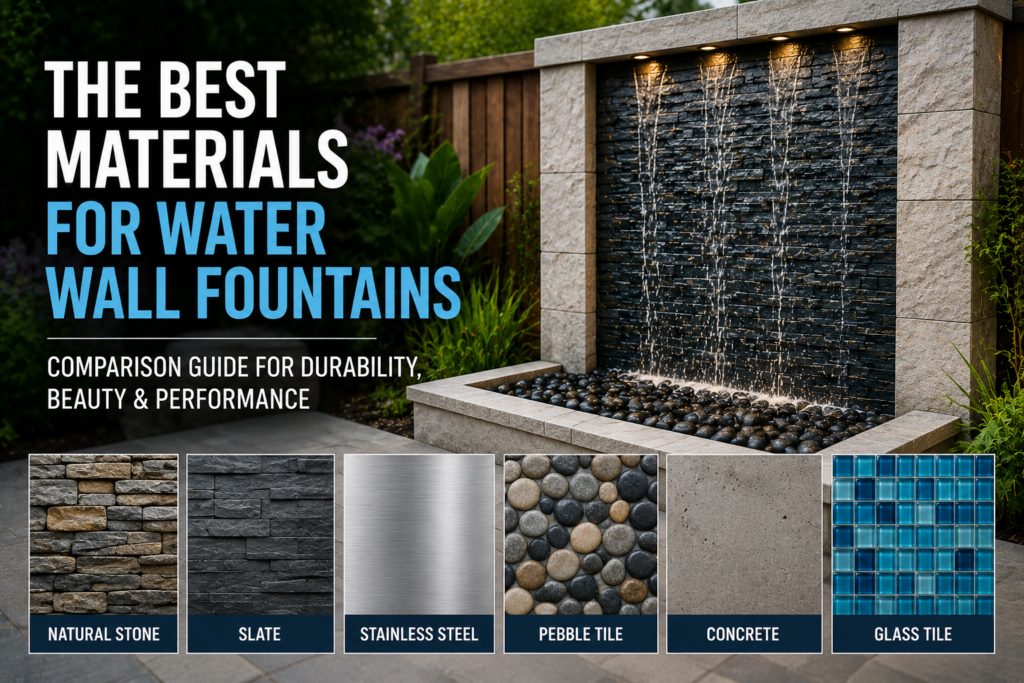
Choosing the right material is one of the most important decisions you’ll make when building a water wall fountain.
The material affects not only the appearance of the fountain, but also its cost, maintenance requirements, durability, and ease of construction.
In this guide, we’ll compare the most popular water wall materials including slate, tile, glass, copper, stainless steel, and stone veneer to help you select the best option for your project.
What Makes a Good Water Wall Material?
An ideal water wall surface should:
- Promote smooth water flow
- Resist moisture damage
- Be easy to clean
- Maintain an attractive appearance
- Fit within your budget
- Match your design style
Not every material performs equally well in all categories.
Slate Water Walls
Slate remains one of the most popular materials for DIY water wall fountains.
Its natural texture creates visual interest while helping disguise water spots and mineral deposits.
Advantages
- Natural appearance
- Hides hard water stains
- Excellent durability
- Timeless design
Disadvantages
- Heavy
- More expensive than tile
- Can be difficult to cut
Cost
Typically:
$8–25 per square foot
Best For
- Outdoor water walls
- Rustic designs
- High-end DIY projects
Tile Water Walls
Tile is one of the most versatile and affordable options available.
Modern porcelain tile comes in countless colors, textures, and styles.
Advantages
- Affordable
- Easy to install
- Huge design variety
- Readily available
Disadvantages
- Grout lines may interrupt water flow
- Some finishes show water spots
Cost
Typically:
$3–15 per square foot
Best For
- Budget-friendly projects
- Indoor water walls
- Modern designs
Glass Water Walls
Glass water walls are often considered the most elegant and modern option.
Water flows smoothly across the glass surface, creating a clean architectural appearance.
Advantages
- Smooth water flow
- Modern aesthetic
- Reflects light beautifully
Disadvantages
- Expensive
- Requires frequent cleaning
- Water spots are highly visible
Cost
Typically:
$20–100+ per square foot
Best For
- Luxury homes
- Commercial installations
- Contemporary interiors
Copper Water Walls
Copper creates one of the most unique and visually striking water wall surfaces.
Over time, copper develops a natural patina that adds character and depth.
Advantages
- Distinctive appearance
- Exceptional durability
- Ages beautifully
Disadvantages
- Higher cost
- Color changes over time
Cost
Typically:
$25–100+ per square foot
Best For
- Premium projects
- Rustic-modern designs
- Outdoor installations
Stainless Steel Water Walls
Stainless steel is a favorite for contemporary architecture and commercial spaces.
Advantages
- Clean modern appearance
- Durable
- Corrosion resistant
Disadvantages
- Shows fingerprints
- Can reveal water spots
Cost
Typically:
$15–60 per square foot
Best For
- Modern homes
- Offices
- Commercial properties
Stone Veneer Water Walls
Stone veneer provides the look of natural stone without the weight and cost.
Advantages
- Realistic appearance
- Easier installation
- Reduced weight
Disadvantages
- Not as durable as solid stone
- Quality varies
Cost
Typically:
$5–20 per square foot
Best For
- DIY projects
- Budget-conscious builds
- Outdoor fountains
River Rock Water Walls
River rock creates a natural waterfall effect that blends beautifully into landscaping.
Advantages
- Organic appearance
- Unique texture
- Excellent outdoor aesthetics
Disadvantages
- Uneven water flow
- More difficult to clean
Cost
Typically:
$5–25 per square foot
Best For
- Garden water features
- Natural landscapes
- Backyard retreats
Which Material Is Best for Indoor Water Walls?
For indoor installations, the best choices are typically:
- Glass
- Tile
- Stainless Steel
- Copper
These materials provide clean appearances and integrate well into interior design.
Which Material Is Best for Outdoor Water Walls?
Outdoor projects generally perform best with:
- Slate
- Stone Veneer
- Copper
- River Rock
These materials tolerate weather conditions and hide mineral deposits more effectively.
Best Material for DIY Water Walls
For most homeowners, porcelain tile offers the best balance of:
- Cost
- Availability
- Ease of installation
- Durability
A tile water wall can often deliver a premium appearance without the cost of natural stone or glass.
Maintenance Comparison
| Material | Maintenance Level |
|---|---|
| Tile | Low |
| Slate | Low |
| Glass | High |
| Copper | Low |
| Stainless Steel | Moderate |
| Stone Veneer | Low |
| River Rock | Moderate |
Our Recommendation
If you’re building your first DIY water wall fountain, start with:
Best Budget Choice
Porcelain Tile
Best Overall Choice
Slate
Best Modern Choice
Glass
Best Premium Choice
Copper
Each material can produce stunning results when paired with proper lighting, plumbing, and design.
Final Thoughts
The best water wall material depends on your budget, maintenance preferences, and design goals.
For most DIY builders, tile and slate provide the best combination of affordability, appearance, and ease of installation. Those seeking a more luxurious aesthetic may prefer glass or copper.
Before making a final decision, consider viewing material samples in person and evaluating how each option will complement your home or outdoor space.
A well-chosen material can elevate a simple water wall into a true architectural centerpiece.
Different materials can dramatically affect maintenance requirements. Learn more in our Water Wall Fountain Maintenance Guide.
Need inspiration? Browse our Indoor Water Wall Ideas and Outdoor Water Wall Ideas.
Want to estimate costs? See our Water Wall Fountain Cost Guide.