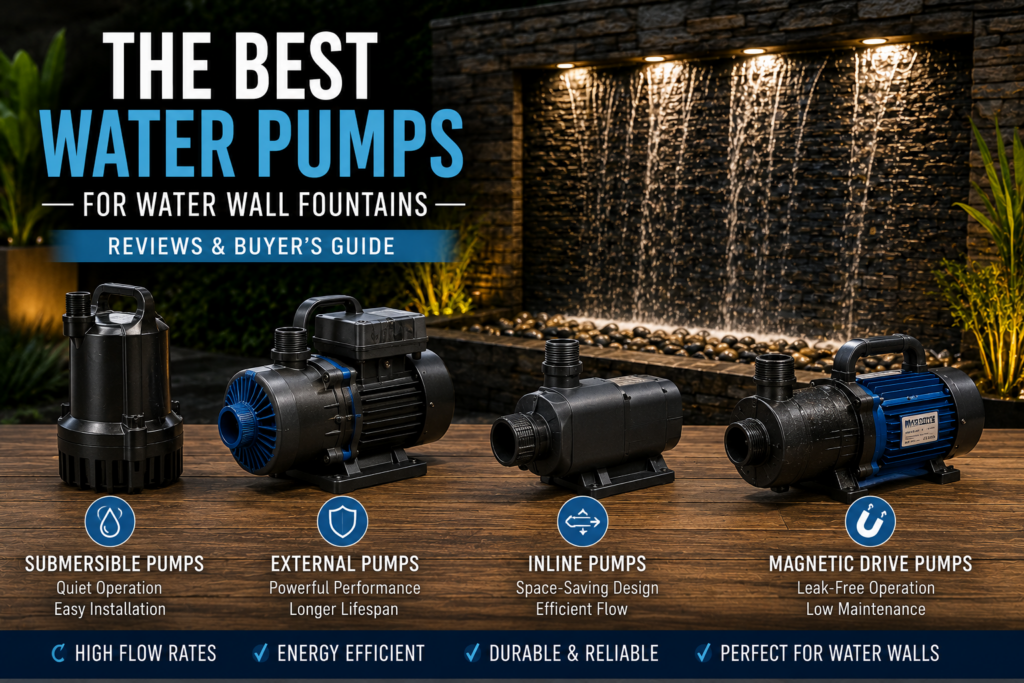
A water wall fountain is only as good as the pump that powers it.
Choosing the right water pump affects everything from water flow and noise levels to maintenance requirements and long-term reliability. A pump that is too small may create weak, uneven water flow, while an oversized pump can cause excessive splashing and unnecessary energy consumption.
In this guide, we’ll explain how to choose the best water pump for a water wall fountain, compare different pump types, and recommend ideal flow rates for various fountain sizes.
Why the Pump Matters
The pump is the heart of every water wall fountain.
A quality pump provides:
- Consistent water flow
- Quiet operation
- Improved reliability
- Lower maintenance requirements
- Better energy efficiency
Investing in the proper pump from the beginning can prevent many common water wall problems.
How Water Wall Pumps Work
A water wall pump draws water from the reservoir basin and pushes it upward through tubing to the distribution tray at the top of the wall.
The water then flows down the wall surface and returns to the reservoir, creating a continuous recirculating system.
The key specifications to understand are:
- Flow Rate (GPH)
- Maximum Head Height
- Power Consumption
- Noise Level
Understanding Flow Rate (GPH)
Pump flow is measured in:
Gallons Per Hour (GPH)
The wider your water wall, the more flow you typically need.
Small Water Walls (12–24 inches wide)
Recommended Flow Rate:
150–400 GPH
Ideal for:
- Indoor fountains
- Tabletop fountains
- Small decorative features
Medium Water Walls (24–48 inches wide)
Recommended Flow Rate:
400–800 GPH
Ideal for:
- Most residential DIY projects
- Indoor feature walls
- Patio fountains
Large Water Walls (48–72 inches wide)
Recommended Flow Rate:
800–1,500 GPH
Ideal for:
- Outdoor installations
- Statement water features
- Commercial applications
Extra Large Water Walls
Recommended Flow Rate:
1,500–3,000+ GPH
Ideal for:
- Architectural installations
- Large commercial projects
- Resort-style water features
Understanding Head Height
Head height refers to the vertical distance the pump can push water.
For example:
If your water wall is 5 feet tall, you should choose a pump with a maximum head height significantly greater than 5 feet.
A good rule of thumb:
Choose a pump rated for at least:
1.5–2 times the actual lift height
This helps maintain adequate flow.
Submersible vs External Pumps
Submersible Pumps
Submersible pumps sit directly inside the reservoir.
Advantages
- Easy installation
- Quiet operation
- Lower cost
- Minimal plumbing
Disadvantages
- Less accessible for maintenance
- Limited capacity on large projects
Best For
- Most DIY water wall fountains
- Indoor installations
- Small and medium projects
External Pumps
External pumps are installed outside the water reservoir.
Advantages
- Higher flow capacity
- Easier maintenance access
- Longer lifespan in some applications
Disadvantages
- More expensive
- More plumbing required
- Slightly louder
Best For
- Large outdoor water walls
- Commercial installations
- High-flow systems
Energy Efficiency
Water wall fountains often operate many hours each day.
Choosing an energy-efficient pump can reduce operating costs.
Look for pumps that feature:
- Energy-efficient motors
- Adjustable flow controls
- Continuous-duty ratings
A slightly more expensive pump often pays for itself through lower electricity consumption.
Noise Considerations
One of the biggest reasons people install water walls is relaxation.
A noisy pump can ruin the experience.
For quiet operation:
- Choose a quality pump
- Avoid oversized pumps
- Place pumps on vibration-reducing pads
- Keep water levels properly maintained
Low water levels are a common cause of pump noise.
Recommended Pump Sizes by Water Wall Width
| Water Wall Width | Recommended Pump |
|---|---|
| 12–24 inches | 150–400 GPH |
| 24–36 inches | 400–600 GPH |
| 36–48 inches | 600–800 GPH |
| 48–72 inches | 800–1,500 GPH |
| 72+ inches | 1,500–3,000+ GPH |
These recommendations provide a good starting point for most residential projects.
Common Pump Mistakes
Choosing Too Small a Pump
Results:
- Weak water flow
- Dry spots
- Poor visual appearance
Choosing Too Large a Pump
Results:
- Excessive splashing
- Water loss
- Increased energy costs
Ignoring Head Height
A pump may appear large enough on paper but fail to provide adequate flow at the required height.
Always consider both GPH and head height.
Buying the Cheapest Pump Available
While budget matters, extremely inexpensive pumps often fail sooner and require more maintenance.
A quality pump can provide years of reliable service.
How Long Do Water Wall Pumps Last?
A quality pump typically lasts:
Indoor Systems
5–10 years
Outdoor Systems
3–7 years
Actual lifespan depends on:
- Water quality
- Maintenance
- Operating hours
- Environmental conditions
Routine cleaning significantly extends pump life.
Our Recommendations
Best Small Water Wall Pump
150–400 GPH submersible pump.
Best All-Around DIY Water Wall Pump
400–800 GPH adjustable submersible pump.
Best Large Outdoor Water Wall Pump
800–1,500 GPH high-efficiency submersible or external pump.
Best Commercial Water Wall Pump
1,500+ GPH external pump system.
The ideal pump depends on your specific project dimensions and design goals.
Frequently Asked Questions
Can a pump be too powerful?
Yes. Excessive flow often causes splashing, water loss, and uneven water distribution.
What size pump do I need for a 4-foot water wall?
Most 4-foot water walls perform well with pumps in the 600–800 GPH range.
Are submersible pumps reliable?
Yes. Most residential water walls use submersible pumps successfully for many years.
How often should I clean my pump?
Inspect monthly and clean as needed.
Final Thoughts
Selecting the right water pump is one of the most important decisions you’ll make when building a water wall fountain.
For most homeowners, a quality adjustable submersible pump in the 400–800 GPH range provides the best balance of performance, reliability, and affordability.
By choosing the proper flow rate, accounting for head height, and performing routine maintenance, you can enjoy beautiful water flow and years of reliable operation from your water wall fountain.
The pump is one of the largest expenses in many projects. Learn more in our Water Wall Fountain Cost Guide.
Need help designing your project? Explore our DIY Water Wall Plans guide.
Proper maintenance can dramatically extend pump lifespan. See our Water Wall Fountain Maintenance Guide.