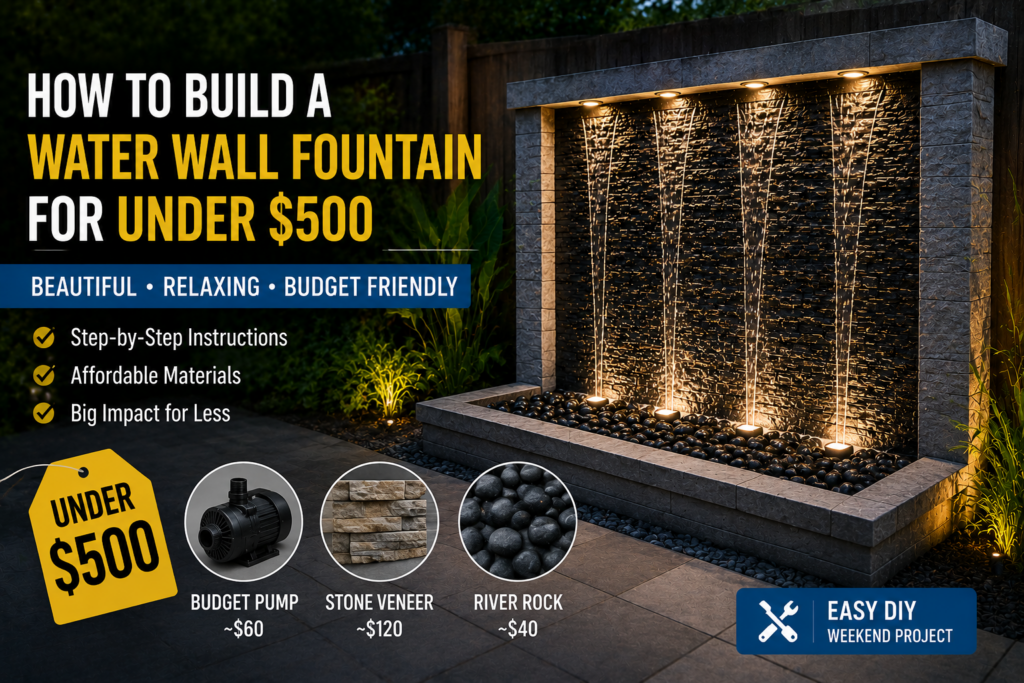
Many homeowners assume a beautiful water wall fountain requires a professional installation costing thousands of dollars.
The truth is that a stunning DIY water wall can often be built for less than $500 using readily available materials and basic tools.
In this guide, we’ll show you how to build an attractive water wall fountain on a budget while maintaining a professional appearance.
Whether you’re creating a backyard focal point, patio feature, or indoor accent wall, this project can be completed by most DIY enthusiasts over a weekend.
Can You Really Build a Water Wall for Under $500?
Yes.
The key is selecting cost-effective materials and avoiding expensive custom fabrication.
A typical budget-friendly water wall can include:
- PVC backing board
- Porcelain tile surface
- Submersible fountain pump
- Hidden water reservoir
- Basic LED lighting
While it won’t match a $10,000 architectural installation, it can provide 80–90% of the visual impact at a fraction of the cost.
Project Overview
Estimated Cost
$250–500
Difficulty Level
Beginner to Intermediate
Estimated Build Time
1–2 Days
Typical Dimensions
36–48 inches wide
48–72 inches tall
Materials List
Water Wall Surface
Porcelain Tile
Estimated Cost:
$50–150
Porcelain tile is durable, attractive, and easy to install.
PVC Backing Board
Estimated Cost:
$40–100
PVC board is waterproof and ideal for fountain construction.
Fountain Pump
Recommended Size:
400–800 GPH
Estimated Cost:
$40–100
The pump is the heart of the system and should not be overlooked.
Water Reservoir
Estimated Cost:
$30–100
Options include:
- Plastic storage containers
- Utility tubs
- Small pond basins
The reservoir will be hidden inside the base structure.
Tubing and Plumbing Fittings
Estimated Cost:
$20–50
Flexible vinyl tubing works well for most DIY water walls.
LED Lighting
Estimated Cost:
$20–75
Optional but highly recommended.
Lighting dramatically improves nighttime appearance.
Fasteners and Construction Materials
Estimated Cost:
$20–50
Includes:
- Screws
- Adhesives
- Sealants
- Brackets
Example Budget Breakdown
| Item | Estimated Cost |
|---|---|
| Tile | $100 |
| PVC Board | $60 |
| Pump | $70 |
| Reservoir | $50 |
| Plumbing | $30 |
| Lighting | $40 |
| Miscellaneous Supplies | $30 |
| Total | $380 |
This leaves room in the budget for upgrades if desired.
Step 1: Build the Frame
Construct a simple rectangular frame using:
- Treated lumber
- Composite boards
- PVC trim boards
The frame supports both the water wall surface and hidden reservoir.
Keep the design simple.
Clean lines often look more expensive than overly complicated construction.
Step 2: Install the Water Wall Surface
Attach the PVC backing board to the frame.
Then install your selected finish material.
Popular budget options include:
- Porcelain tile
- Faux slate panels
- Stone-look tile
Ensure the surface is flat and securely attached.
Smooth water flow depends on proper installation.
Step 3: Install the Reservoir
Place the water reservoir inside the base structure.
The reservoir should:
- Hold adequate water volume
- Conceal the pump
- Allow easy maintenance access
A larger reservoir reduces the frequency of refilling.
Step 4: Install the Pump
Place the pump inside the reservoir.
Connect tubing from the pump to the top distribution tray.
Choose tubing sized according to the pump manufacturer’s recommendations.
Step 5: Create the Water Distribution System
The distribution system determines how evenly water flows down the wall.
Common methods include:
- Slotted PVC pipe
- Waterfall spillways
- Distribution trays
The goal is consistent water coverage across the entire width of the wall.
Step 6: Add Lighting
LED lighting dramatically improves visual impact.
Popular placement options include:
- Base lighting
- Side lighting
- Backlighting
Warm white lighting works well for most residential installations.
Step 7: Test Water Flow
Fill the reservoir and power on the pump.
Inspect for:
- Dry spots
- Uneven flow
- Splashing
- Leaks
Adjust pump flow as necessary.
Small adjustments often produce significant improvements.
Common Budget Water Wall Mistakes
Using an Undersized Pump
Weak flow is one of the most common DIY mistakes.
Always choose a pump with sufficient capacity.
Building Too Large
Many first-time builders attempt oversized projects.
Starting smaller improves the likelihood of success.
Skipping Maintenance Access
Make sure the pump and reservoir remain accessible.
Future maintenance becomes much easier.
Choosing Poor Surface Materials
Some materials absorb water, stain easily, or create uneven flow.
Stick with proven water wall surfaces such as tile, slate, or PVC-compatible finishes.
How to Make a Budget Water Wall Look Expensive
Several small upgrades can dramatically improve appearance.
Add LED Lighting
Creates luxury appeal.
Hide the Reservoir
Concealed plumbing always looks more professional.
Use Larger Format Tile
Reduces grout lines.
Create a Wider Water Sheet
Even water coverage appears more expensive.
Incorporate Landscaping
Plants and decorative stone enhance the overall design.
Indoor vs Outdoor Budget Water Walls
Indoor Water Walls
Advantages:
- Lower maintenance
- Protected environment
- Year-round enjoyment
Outdoor Water Walls
Advantages:
- Larger scale
- Greater visual impact
- Enhanced landscaping
Both can be built successfully within a modest budget.
Frequently Asked Questions
What is the cheapest material for a water wall?
Porcelain tile is often the best combination of cost, durability, and appearance.
Can I build a water wall without professional help?
Yes. Most DIY builders can complete a simple water wall project using basic tools.
How much electricity does a water wall use?
Most residential pumps consume relatively little power and cost only a few dollars per month to operate.
How often will I need to refill the reservoir?
This depends on climate, temperature, and water wall size. Most systems require periodic topping off due to evaporation.
Final Thoughts
Building a water wall fountain for under $500 is entirely achievable with careful planning and smart material choices.
By focusing on proven materials, a reliable pump, and a clean design, you can create a beautiful water feature that looks far more expensive than it actually is.
For many homeowners, a DIY water wall represents one of the best ways to add luxury, relaxation, and visual interest to a home or outdoor living space without spending thousands of dollars.
For additional project ideas, see our DIY Water Wall Plans guide.
Choosing affordable materials is critical. Read Best Water Wall Materials.
Avoid costly beginner errors by reviewing 10 Water Wall Fountain Mistakes to Avoid.