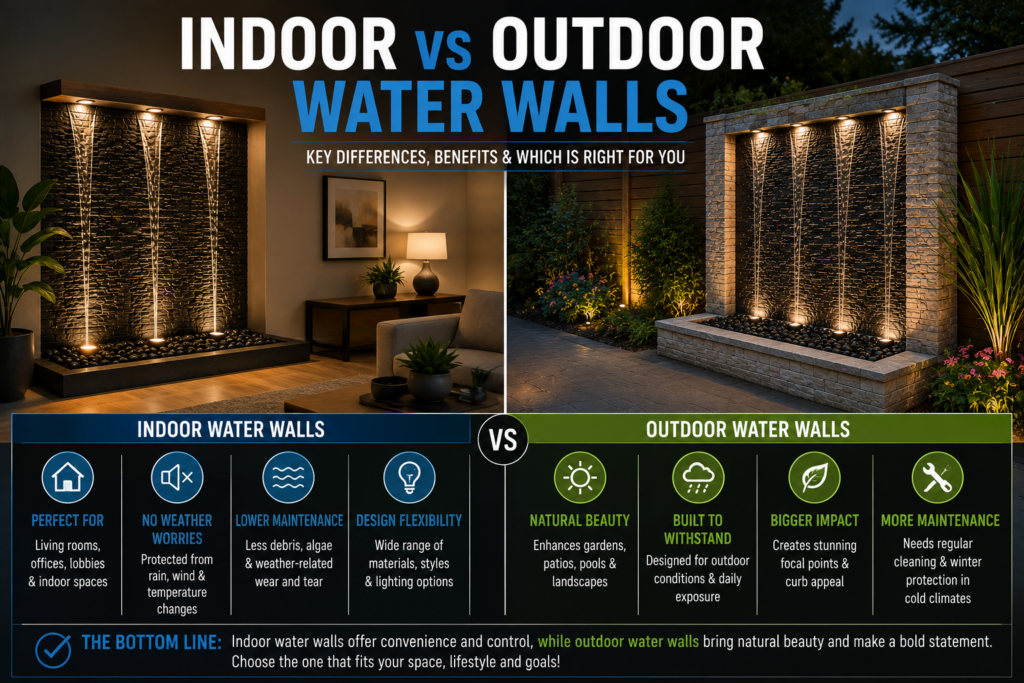
Water wall fountains have become one of the most popular water features for homeowners seeking to create a relaxing and visually stunning environment. Whether installed inside a home or integrated into an outdoor landscape, a well-designed water wall can serve as a dramatic focal point while providing the soothing sound of flowing water.
One of the first decisions homeowners face is whether to build an indoor water wall or an outdoor water wall. Both options offer unique advantages, costs, maintenance requirements, and design opportunities.
In this guide, we’ll compare indoor and outdoor water walls in detail so you can determine which option best fits your space, lifestyle, and budget.
What Is a Water Wall?
A water wall is a vertical water feature where water flows continuously over a surface such as slate, tile, glass, stainless steel, stone, or copper.
Unlike traditional fountains that often spray water upward, water walls create a smooth sheet of flowing water that cascades down a vertical surface and recirculates through a hidden reservoir.
Water walls can be installed:
- Inside homes
- On patios
- Around swimming pools
- In gardens
- In offices and commercial buildings
The overall effect is both visually striking and highly relaxing.
Benefits of Indoor Water Walls
Indoor water walls have become increasingly popular in modern homes because they combine luxury with functionality.
Creates a Relaxing Environment
One of the primary benefits of an indoor water wall is the calming sound of moving water.
Many homeowners find that a water wall helps:
- Reduce stress
- Improve relaxation
- Mask background noise
- Create a spa-like atmosphere
Adds Architectural Interest
An indoor water wall can instantly elevate the appearance of a room.
Popular locations include:
- Entryways
- Living rooms
- Home offices
- Dining rooms
- Stairwells
Large water walls often become the focal point of the entire space.
Protection from Weather
Because indoor water walls are protected from rain, wind, leaves, and sunlight, they generally require less maintenance than outdoor installations.
Year-Round Enjoyment
Unlike some outdoor water features, indoor water walls can be enjoyed every day regardless of weather conditions.
Drawbacks of Indoor Water Walls
While indoor water walls offer many benefits, they also present certain challenges.
Limited Size
Indoor installations are typically restricted by ceiling height and room dimensions.
Higher Installation Complexity
Waterproofing, electrical requirements, and flooring protection must be carefully considered.
Humidity Considerations
Although most residential water walls produce only modest humidity, larger systems may affect indoor moisture levels.
Water Spill Risk
Proper construction and maintenance are essential to prevent accidental leaks.
Benefits of Outdoor Water Walls
Outdoor water walls offer a different set of advantages and often provide greater design flexibility.
Larger Design Possibilities
Outdoor installations can be significantly larger than indoor systems.
Many homeowners incorporate water walls into:
- Patios
- Pool areas
- Garden walls
- Outdoor kitchens
- Landscape features
Increased Visual Impact
Outdoor water walls can become dramatic architectural focal points that transform an entire backyard.
Improved Privacy
Many outdoor water walls serve double duty as privacy screens.
The sound of flowing water also helps mask traffic and neighborhood noise.
Integration with Landscaping
Outdoor water walls blend beautifully with:
- Plants
- Decorative stone
- Lighting
- Hardscaping
- Water gardens
Drawbacks of Outdoor Water Walls
Outdoor systems generally require more maintenance than indoor installations.
Exposure to Weather
Outdoor water walls must withstand:
- Rain
- Wind
- Heat
- Freezing temperatures
- Sunlight
Increased Maintenance
Outdoor systems often accumulate:
- Leaves
- Dirt
- Pollen
- Insects
More frequent cleaning is usually required.
Seasonal Operation
In colder climates, outdoor water walls may need to be winterized or shut down during freezing weather.
Cost Comparison
Cost is often a major deciding factor.
Indoor Water Wall Costs
Small DIY projects:
$300–$1,000
Mid-range installations:
$1,000–$5,000
Luxury custom installations:
$5,000–$20,000+
Outdoor Water Wall Costs
Small DIY projects:
$250–$1,500
Mid-range installations:
$1,500–$8,000
Large custom installations:
$5,000–$50,000+
Because outdoor systems can be much larger, the upper end of the price range is often significantly higher.
Maintenance Comparison
Indoor Water Walls
Typically require:
- Monthly cleaning
- Water top-offs
- Occasional pump maintenance
Average maintenance level:
Low
Outdoor Water Walls
Typically require:
- Debris removal
- Seasonal cleaning
- Algae prevention
- Winterization
Average maintenance level:
Moderate
For homeowners seeking minimal upkeep, indoor water walls generally have an advantage.
Best Materials for Indoor Water Walls
Popular indoor materials include:
- Glass
- Tile
- Stainless steel
- Copper
- Slate
These materials perform well in climate-controlled environments and provide a clean, modern appearance.
Best Materials for Outdoor Water Walls
Outdoor installations often benefit from:
- Slate
- Stone veneer
- River rock
- Concrete
- Copper
These materials handle weather exposure and mineral deposits more effectively.
Which Option Is Better for DIY Builders?
For most first-time builders, outdoor water walls are often easier.
Benefits include:
- More available space
- Easier access during construction
- Less concern about indoor water damage
However, small indoor water walls can also be excellent DIY projects when properly planned.
Frequently Asked Questions
Do indoor water walls increase home value?
While value varies by market, many buyers view custom water features as desirable luxury upgrades.
Are outdoor water walls expensive to operate?
Most residential fountain pumps consume relatively little electricity and cost only a few dollars per month to operate.
Which is easier to maintain?
Indoor water walls typically require less maintenance due to protection from weather and debris.
Which creates more visual impact?
Large outdoor water walls generally create the greatest visual impact due to their scale.
Final Thoughts
Both indoor and outdoor water walls offer unique benefits. Indoor installations provide year-round enjoyment, lower maintenance requirements, and dramatic interior design opportunities. Outdoor water walls offer larger design possibilities, enhanced landscaping, and the ability to create impressive backyard focal points.
For homeowners seeking a low-maintenance luxury feature, an indoor water wall may be the ideal choice. For those wanting to transform a patio, garden, or outdoor living space, an outdoor water wall often provides the greatest impact.
The best choice ultimately depends on your available space, budget, maintenance preferences, and design goals. With proper planning, either option can become one of the most enjoyable and visually striking features in your home.
Looking for inspiration? Browse our Indoor Water Wall Ideas and Outdoor Water Wall Ideas.
If you’re planning a build, start with our DIY Water Wall Plans guide.
Material selection plays a major role in long-term success. Read Best Water Wall Materials.