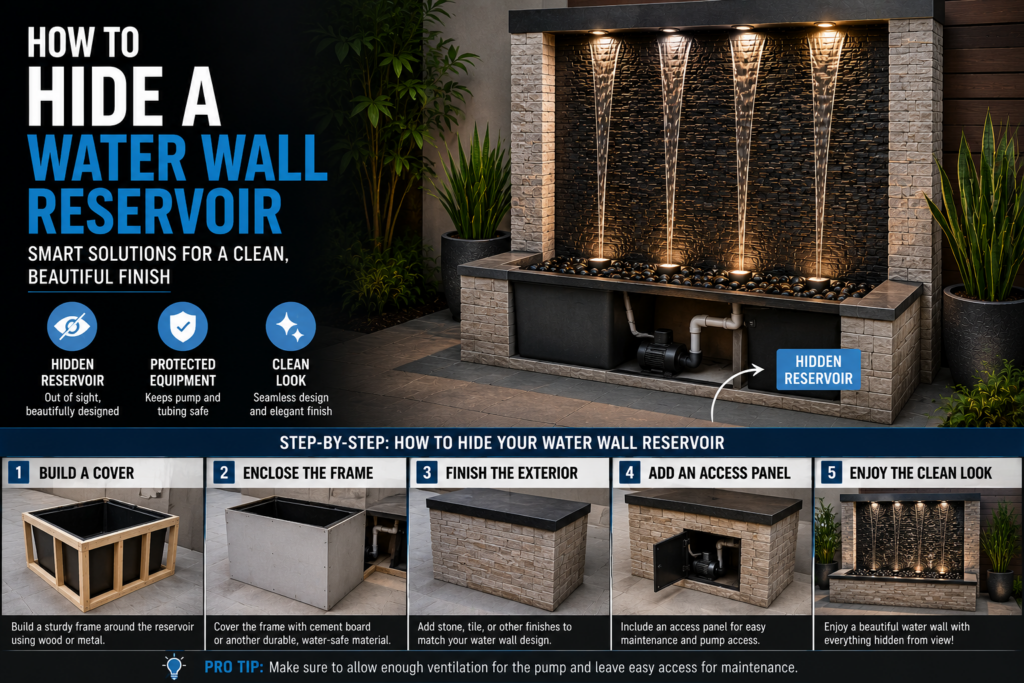
One of the biggest differences between an amateur-looking water wall and a professional installation is how the reservoir is handled.
Many DIY water walls function perfectly but lose visual appeal because the reservoir, plumbing, or pump remains visible. Exposed equipment can make even an expensive water feature look unfinished.
Professional designers understand that the most impressive water walls often conceal the mechanical components entirely. When visitors see only the flowing water and beautiful materials, the fountain appears cleaner, more elegant, and significantly more expensive.
In this guide, we’ll explore the best ways to hide a water wall reservoir, conceal plumbing, improve maintenance access, and create a polished finished product.
What Is a Water Wall Reservoir?
A water wall reservoir is the basin that collects and stores water before it is recirculated through the fountain system.
The reservoir typically houses:
- Water supply
- Fountain pump
- Tubing
- Electrical connections
- Water treatment products
Without a properly designed reservoir, a water wall cannot function.
The challenge is incorporating the reservoir without making it visually obvious.
Why Hiding the Reservoir Matters
A visible reservoir often becomes the first thing people notice.
Unfortunately, pumps, tubing, and plastic basins rarely contribute to the overall appearance of a water feature.
Concealing these elements offers several benefits:
- Cleaner appearance
- More professional design
- Better integration with surroundings
- Improved visual focus on the water itself
- Greater perceived value
Luxury resorts, hotels, and commercial water features almost always hide their reservoirs completely.
The Hidden Basin Method
The most common professional solution is the hidden basin.
In this design, the reservoir sits beneath a decorative cover while the water wall rises above it.
Visitors see:
- Flowing water
- Decorative stone
- Architectural materials
They do not see:
- Pump
- Tubing
- Reservoir
This creates the illusion that the water simply disappears into the ground.
Best For
- Outdoor water walls
- Patio installations
- Garden fountains
Decorative Stone Covers
One of the simplest ways to hide a reservoir is with decorative stone.
Popular options include:
- River rock
- Polished pebbles
- Decorative gravel
- Crushed granite
The stones allow water to pass through while concealing the basin below.
Advantages
- Affordable
- Attractive
- Easy to install
- Natural appearance
Disadvantages
- Debris can collect between stones
- Cleaning may require occasional removal
Metal Grate Covers
Commercial water features often use metal grates to conceal reservoirs.
The grate supports decorative materials while allowing water to flow freely.
Advantages
- Extremely durable
- Excellent access for maintenance
- Professional appearance
Best For
- Large water walls
- Commercial installations
- High-traffic areas
Composite Decking Covers
Composite decking materials can create a modern and durable reservoir cover.
The cover can be designed to match:
- Patio decking
- Outdoor kitchens
- Seating areas
Advantages
- Low maintenance
- Durable
- Attractive appearance
Best For
- Modern landscapes
- Contemporary patios
- Outdoor entertainment areas
Bench Seating Reservoir Covers
One of the most creative solutions is incorporating the reservoir into functional seating.
The base of a bench can conceal:
- Reservoir
- Pump
- Plumbing
This approach maximizes both aesthetics and functionality.
Advantages
- Dual-purpose design
- Efficient use of space
- Luxury appearance
Best For
- Small patios
- Courtyards
- Outdoor living spaces
Raised Planter Reservoir Covers
Planters can effectively disguise the mechanical components of a water wall.
The reservoir sits below while plants provide visual interest above.
Popular plant choices include:
- Ornamental grasses
- Ferns
- Dwarf shrubs
- Flowering perennials
Advantages
- Natural appearance
- Softens hard surfaces
- Enhances landscaping
Best For
- Gardens
- Courtyards
- Backyard retreats
Integrating the Reservoir into a Wall Structure
Many modern water walls conceal the reservoir entirely within the wall structure itself.
This creates a seamless appearance where only the water feature is visible.
Advantages
- Ultra-clean appearance
- Luxury aesthetic
- Minimal visual clutter
Disadvantages
- More complex construction
- Careful planning required
Indoor Water Wall Reservoir Solutions
Indoor water walls require special attention because space is often limited.
Popular approaches include:
Cabinet Bases
The reservoir sits inside a decorative cabinet beneath the fountain.
Built-In Furniture
Custom cabinetry conceals all mechanical components.
Architectural Niches
The water wall becomes integrated into the room design.
These approaches maintain a clean appearance while preserving maintenance access.
Don’t Forget Maintenance Access
One of the biggest DIY mistakes is hiding the reservoir too well.
Eventually you will need access to:
- Pump
- Tubing
- Electrical connections
- Water treatments
A beautiful installation becomes frustrating if maintenance requires partial disassembly.
Best Practice
Include:
- Removable panels
- Hinged access doors
- Lift-off covers
Always plan for future maintenance.
How Much Space Does a Reservoir Need?
Many DIY builders underestimate reservoir size requirements.
A larger reservoir provides several benefits:
- More stable water levels
- Less frequent refilling
- Better pump performance
- Reduced maintenance
For most residential water walls, bigger is usually better.
Common Reservoir Design Mistakes
Reservoir Too Small
Leads to:
- Frequent refilling
- Pump stress
- Increased maintenance
Visible Plumbing
Exposed tubing immediately reduces visual appeal.
No Maintenance Access
Future repairs become difficult and frustrating.
Poor Drainage
Improper drainage can lead to water accumulation and damage.
Inadequate Structural Support
Reservoir covers must safely support decorative materials and foot traffic if applicable.
Professional Design Tips
Create Layers
Combine:
- Decorative stone
- Plants
- Lighting
- Architectural materials
This creates depth and visual interest.
Conceal Plumbing Completely
The less visible equipment, the more professional the installation appears.
Use Lighting Strategically
Lighting draws attention to the water and away from hidden mechanical components.
Match Existing Materials
Coordinate reservoir covers with:
- Patios
- Hardscaping
- Building materials
- Landscaping features
Consistency improves overall design quality.
Best Reservoir Concealment Methods by Project Type
Budget DIY Water Wall
Decorative stone cover.
Modern Water Wall
Composite decking or architectural panels.
Luxury Installation
Integrated wall structure or hidden basin system.
Garden Water Wall
Raised planter concealment.
Commercial Water Feature
Metal grate and hidden vault system.
Frequently Asked Questions
Can a water wall reservoir be completely hidden?
Yes. Many professional water walls conceal the reservoir entirely from view.
How do I access the pump if the reservoir is hidden?
Include removable panels, lift-off covers, or access doors during construction.
What is the easiest way to hide a reservoir?
Decorative stone is often the simplest and most affordable solution.
Can I use plants to hide a water wall basin?
Absolutely. Raised planters are one of the most attractive concealment options available.
Final Thoughts
A hidden reservoir is one of the defining characteristics of a professional-looking water wall fountain. While the reservoir is essential for operation, it should rarely become a focal point of the design.
By using decorative stone, planters, cabinetry, decking, or integrated architectural features, you can conceal the mechanical components and create a cleaner, more luxurious appearance.
Whether you’re building a simple DIY water wall or a large custom installation, investing time in reservoir concealment will dramatically improve the finished result and help your water feature achieve the polished appearance seen in high-end residential and commercial projects.
Many reservoir design mistakes can be avoided during the planning stage. See DIY Water Wall Plans.
For budget-conscious builders, read How to Build a Water Wall Fountain for Under $500.
Proper reservoir design can reduce maintenance requirements. Learn more in our Water Wall Fountain Maintenance Guide.