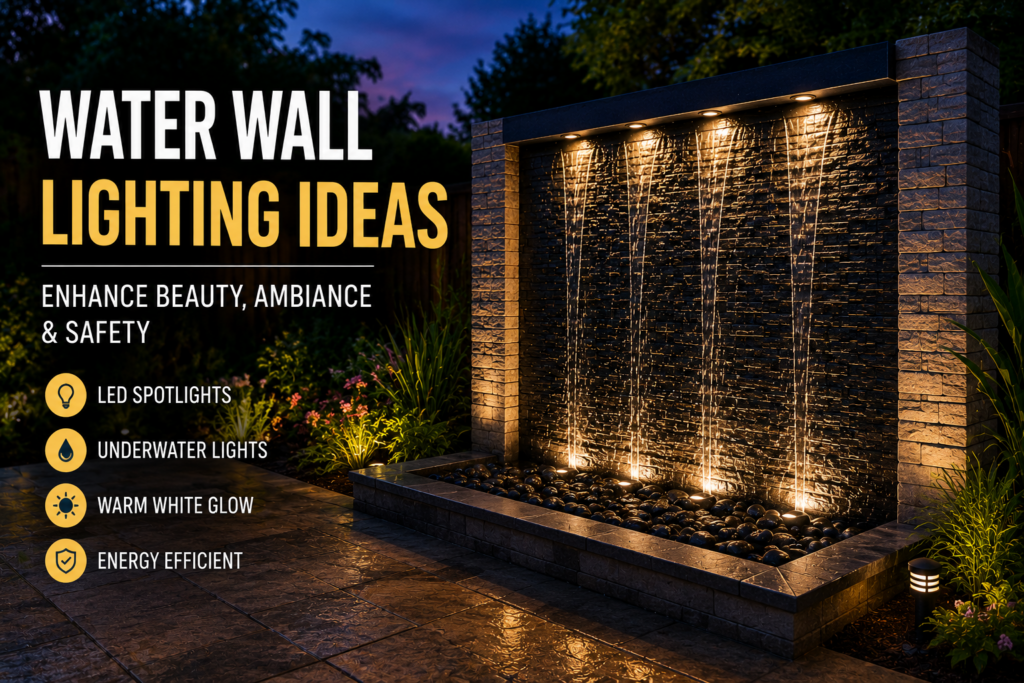
A beautifully designed water wall fountain can become the centerpiece of a home, patio, garden, or outdoor living space. However, one element is often overlooked during the planning process: lighting.
The right lighting can transform an ordinary water wall into a dramatic architectural feature. It highlights the movement of water, enhances textures and materials, extends enjoyment into the evening hours, and creates the luxurious appearance often seen in high-end resorts, hotels, and custom homes.
In this guide, we’ll explore the best lighting options for water wall fountains, discuss placement strategies, compare lighting technologies, and help you choose the right setup for your project.
Why Water Wall Lighting Matters
Water walls rely on movement, texture, and reflection.
During daylight hours, these elements are naturally visible. At night, however, a water wall can virtually disappear without proper illumination.
Quality lighting provides several benefits:
- Highlights moving water
- Creates visual depth
- Improves nighttime visibility
- Enhances safety
- Increases property appeal
- Creates a luxury appearance
Many homeowners are surprised by how dramatically lighting improves the overall impact of a water feature.
Understanding How Light Interacts with Water
Water reflects, refracts, and scatters light in unique ways.
As water flows down a vertical surface, thousands of tiny moving reflections are created. Proper lighting emphasizes this movement and creates a dynamic visual effect.
The best lighting designs typically focus on:
- Illuminating the water itself
- Highlighting the surface material
- Creating contrast
- Minimizing glare
Understanding these principles can help you achieve a professional result.
LED Lighting: The Best Choice for Most Water Walls
LED technology has become the preferred choice for water feature lighting.
Advantages of LED Lighting
- Energy efficient
- Long lifespan
- Low heat output
- Available in multiple colors
- Minimal maintenance
- Weather resistant options available
Most modern water wall installations use LED lighting because it offers the best combination of performance and affordability.
Underwater LED Lights
Underwater lights are installed directly inside the basin or reservoir.
Benefits
- Illuminates falling water from below
- Creates dramatic reflections
- Produces a luxury appearance
Best For
- Outdoor water walls
- Poolside installations
- Large fountains
Underwater lighting is often used in commercial installations because it creates a powerful visual effect.
LED Strip Lighting
LED strips are among the most versatile lighting options available.
They can be concealed within:
- Distribution trays
- Wall edges
- Reservoir covers
- Architectural details
Benefits
- Easy installation
- Affordable
- Uniform illumination
- Flexible placement options
Best For
- DIY water walls
- Modern designs
- Indoor installations
Many homeowners find LED strips provide the greatest visual impact per dollar spent.
Spotlights
Spotlights focus light on specific areas of the water wall.
Benefits
- Highlights textures
- Creates shadows and depth
- Draws attention to architectural features
Best For
- Stone surfaces
- Slate walls
- Large outdoor installations
Spotlights are often combined with other lighting types to create layered effects.
Backlighting
Backlighting places light behind the water wall surface.
This approach is especially effective with:
- Glass panels
- Acrylic panels
- Translucent materials
Benefits
- Modern appearance
- Dramatic visual impact
- Uniform illumination
Best For
- Contemporary homes
- Office buildings
- Luxury installations
Backlit water walls are among the most striking designs available.
Color-Changing RGB Lighting
RGB lighting allows users to change colors using:
- Remote controls
- Smartphone apps
- Automation systems
Benefits
- Customizable appearance
- Seasonal themes
- Entertainment applications
Potential Drawbacks
While color-changing systems are fun, many designers prefer warm white lighting for long-term elegance.
RGB lighting can sometimes appear less sophisticated if overused.
Best Lighting Color Temperature
Color temperature dramatically affects the mood of a water feature.
Warm White (2700K–3000K)
Creates:
- Cozy atmosphere
- Luxury appearance
- Relaxing environment
Recommended for most residential installations.
Neutral White (3500K–4500K)
Creates:
- Clean appearance
- Modern aesthetic
- Balanced illumination
Popular for contemporary homes.
Cool White (5000K–6500K)
Creates:
- Crisp appearance
- Commercial aesthetic
- High contrast
Often used in modern commercial applications.
Best Lighting for Indoor Water Walls
Indoor water walls typically benefit from subtle lighting.
Recommended options:
- Warm white LED strips
- Concealed accent lighting
- Backlit glass systems
The goal is to create ambiance without overwhelming the room.
Best Lighting for Outdoor Water Walls
Outdoor installations often require more powerful lighting.
Recommended options:
- Waterproof LED fixtures
- Underwater lights
- Landscape spotlights
- Architectural accent lighting
Outdoor lighting must also withstand weather conditions.
Lighting Placement Strategies
Lighting from Below
The most popular technique.
Benefits include:
- Highlights water movement
- Creates reflections
- Produces dramatic nighttime effects
Lighting from Above
Creates elegant cascading effects and emphasizes water flow patterns.
Side Lighting
Highlights surface textures such as:
- Slate
- Stone
- River rock
Combination Lighting
The most impressive installations often combine multiple lighting techniques.
Layered lighting produces depth and visual interest.
Common Water Wall Lighting Mistakes
Using Too Much Light
More light is not always better.
Excessive brightness can create glare and reduce the relaxing effect.
Exposed Fixtures
Visible lighting fixtures often detract from the appearance of the water wall.
Concealed lighting generally looks more professional.
Ignoring Maintenance Access
Lighting components eventually require service.
Plan access points during construction.
Mixing Color Temperatures
Inconsistent lighting colors often produce a cluttered appearance.
Choose a single color temperature whenever possible.
Energy Costs
Modern LED systems are highly efficient.
Most residential water wall lighting systems cost only a few dollars per month to operate.
LED fixtures also offer lifespans that often exceed 25,000 to 50,000 hours.
Sample Lighting Setups
Budget Setup
- Warm white LED strip
- Basic transformer
Estimated Cost:
$25–75
Mid-Range Setup
- Waterproof LED strips
- Accent spotlights
- Concealed installation
Estimated Cost:
$100–300
Premium Setup
- Architectural-grade LEDs
- RGB controls
- Automation integration
Estimated Cost:
$500–2,000+
Frequently Asked Questions
Are LED lights safe around water?
Yes. Use fixtures specifically rated for wet environments and follow all manufacturer instructions.
Can I add lighting to an existing water wall?
In most cases, yes. Many water walls can be upgraded with LED strips or spotlights after construction.
What color lighting is best?
Warm white lighting is generally considered the most attractive and timeless option for residential installations.
How long do LED lights last?
Many quality LED fixtures last between 25,000 and 50,000 hours.
Final Thoughts
Lighting is one of the most impactful upgrades you can make to a water wall fountain. A properly illuminated water feature becomes dramatically more attractive after sunset and can transform the entire atmosphere of a space.
For most homeowners, warm white LED lighting offers the best balance of appearance, efficiency, affordability, and longevity. Whether you’re building a simple DIY fountain or a large architectural water wall, investing in quality lighting will significantly enhance the finished result.
By carefully selecting fixtures, planning placement, and choosing appropriate color temperatures, you can create a water wall that remains beautiful and inviting both day and night.
Lighting can dramatically enhance both indoor and outdoor installations. See our Indoor Water Wall Ideas and Outdoor Water Wall Ideas guides.
Planning a new project? Review our DIY Water Wall Plans guide.
If you’re building on a budget, read How to Build a Water Wall Fountain for Under $500.